Conservation
Closed

Investing in Maasai Women
Abstract
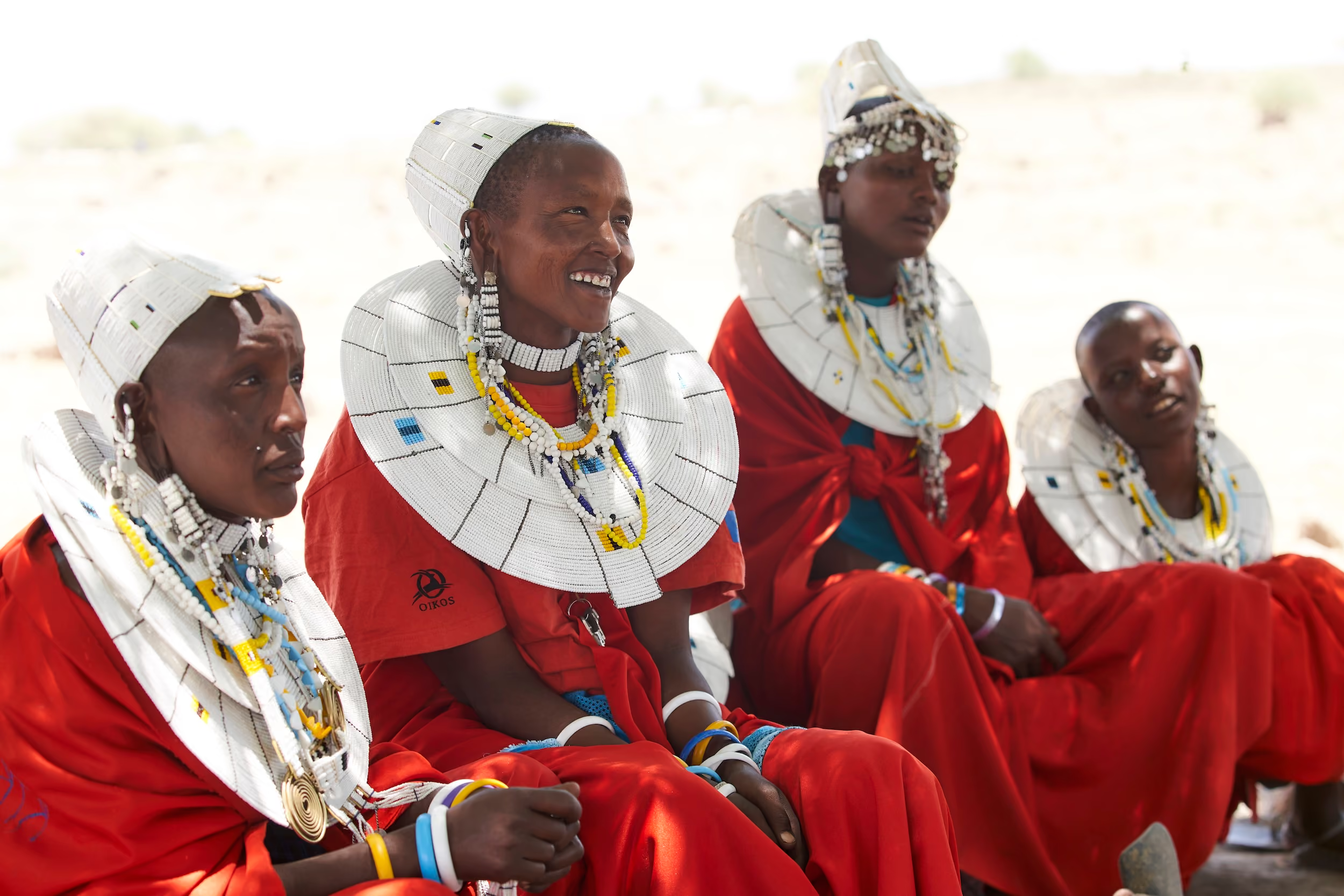
Maasai women in northern Tanzania, particularly in Arusha, Monduli, and Longido districts, face significant socio-economic challenges, including lack of formal education, limited access to basic human rights, minimal political representation, and dependence on informal subsistence economies. These challenges contribute to food insecurity, high child mortality, and social fragmentation within communities.
This project addresses these issues through an integrated, multidisciplinary approach aimed at improving women’s livelihoods and empowerment. It promotes sustainable, market-driven economic development by supporting income-generating activities in dried meat processing, honey production, and tourism. The project also strengthens institutional capacity by supporting the formation of Member-Based Organizations (MBOs) and enhancing existing Traditional Women Groups (TWGs).
Additionally, the project delivers education on human rights, gender equality, nutrition, and health, alongside awareness campaigns and policy engagement. By combining economic empowerment, social inclusion, and institutional strengthening, the project enhances women’s resilience, promotes gender equality, and contributes to improved wellbeing and community cohesion.
Introduction
This project is implemented in Arusha, Monduli, and Longido districts in northern Tanzania, targeting Maasai women who are highly dependent on informal economies. It aims to improve livelihoods, enhance food security, and strengthen women’s participation in socio-economic and political processes. Through economic empowerment, capacity building, and awareness programs, the project supports women to become active contributors to household and community development while promoting gender equality and social cohesion.
Key Activities
1. Sustainable Livelihood Development
The project promotes income-generating activities in three key sectors: dried meat production, honey production, and tourism. These enterprises are designed to be market-driven and environmentally sustainable, improving women’s employability and income. By linking production to local and regional markets, the project enhances economic resilience and reduces dependence on informal subsistence livelihoods.
2. Formation and Strengthening of Member-Based Organizations (MBOs)
The project supports the establishment of 8 new ward-level MBOs to provide a structured platform for women’s economic and social engagement. These organizations enable women to collectively own assets, access services, and strengthen their representation at higher institutional levels, including government. The MBOs also facilitate access to markets, resources, and decision-making processes.
3. Capacity Building of Traditional Women's Groups (TWGs)
The project strengthens 25 existing traditional women's groups by enhancing their capacity to address family issues, resolve conflicts, and promote social cohesion. TWGs serve as key entry points for community engagement, awareness raising, and dissemination of information on women’s rights and empowerment.
4. Education and Awareness on Rights and Health
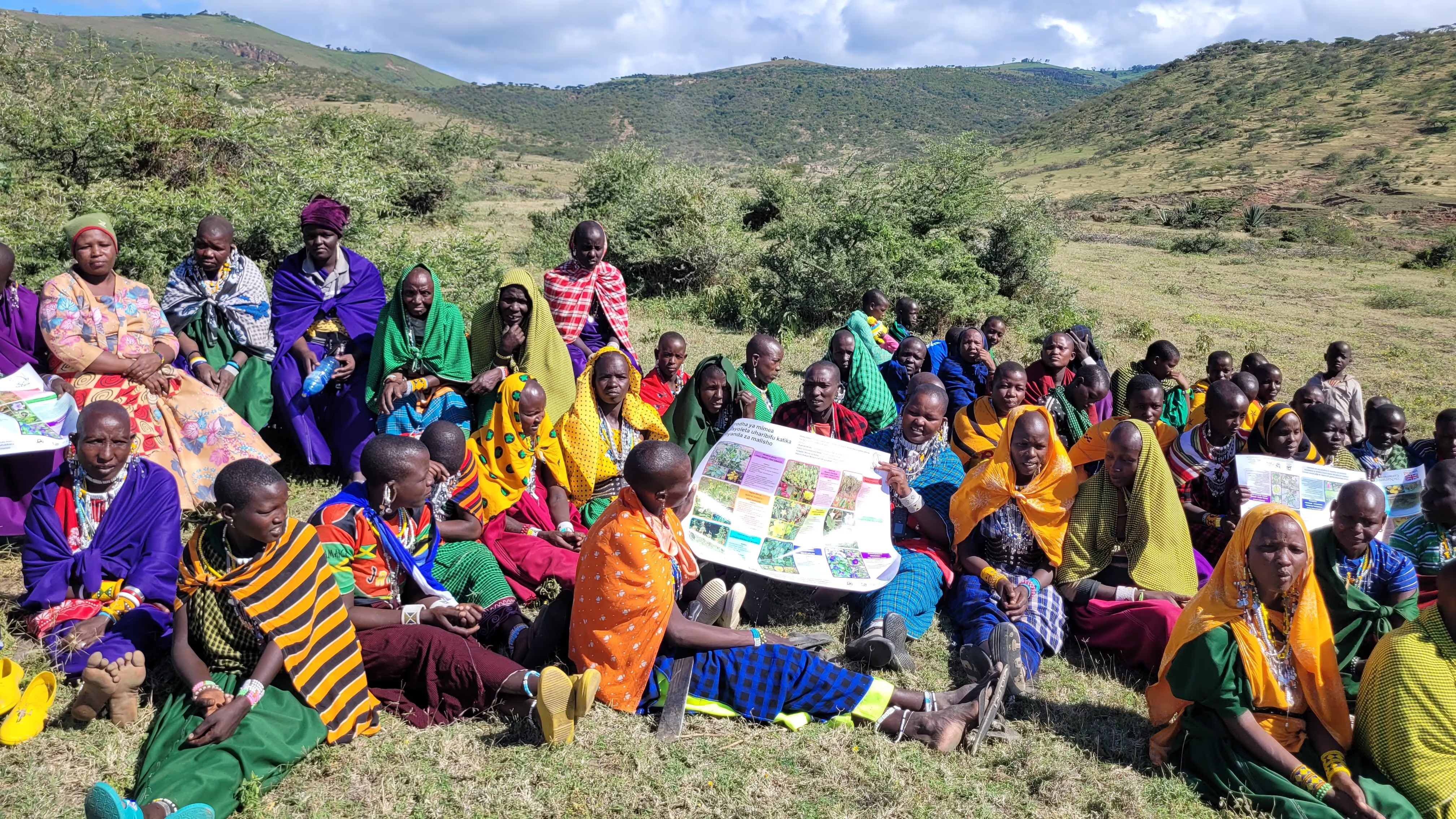
The project provides training on human rights, gender equality, nutrition, and health. These activities aim to improve women’s knowledge and awareness, contributing to reduced maternal mortality and better family wellbeing. Awareness campaigns and community dialogues also promote understanding of social and civil rights among both citizens and local authorities.
5. Policy Engagement and Social Inclusion
Through roundtables and stakeholder engagement, the project promotes dialogue between communities and government institutions. It ensures that marginalized groups, especially women in informal economies, are represented in policy discussions. This strengthens governance, improves service delivery, and enhances inclusion in regional development processes.
Funded by
European Union (EU)
Partners
Maasai Pastoralists Foundation, TRIAS VZW and Marketplace Literacy Communities Trust
More programmes
Empowering communities through sustainable conservation
We believe the health and wellness of future generations will be secured with today’s people-centered approach to environmental conservation.
.jpg)