Conservation
Closed

The Lake Natron-Nguruman Area: Protecting Key Biodiversity Areas for Sustainable Transboundary Management
Abstract
The Natron–Nguruman ecosystem, spanning northern Tanzania and southern Kenya, is a critical biodiversity area and water catchment supporting pastoralist livelihoods and wildlife. However, increasing pressure from climate change, overgrazing, human–wildlife conflict, and unsustainable resource use threatens rangeland productivity and ecosystem health. Indigenous Maasai communities, who depend on pastoralism, are particularly vulnerable to these environmental and socio-economic challenges.
This project addresses these issues through a transboundary approach that strengthens conservation and promotes climate-resilient livelihoods. It focuses on protecting key rangelands and water catchments while empowering communities, especially women, through sustainable, nature-based income-generating activities. The project enhances conservation through ranger support, community awareness, and improved coexistence with wildlife. It also builds capacity through marketplace literacy, enterprise development, and education programs.
By integrating conservation with livelihood diversification and cross-border collaboration, the project aims to improve ecosystem health, strengthen resilience to climate change, and promote sustainable coexistence between people and wildlife in the Natron–Nguruman landscape.
Introduction
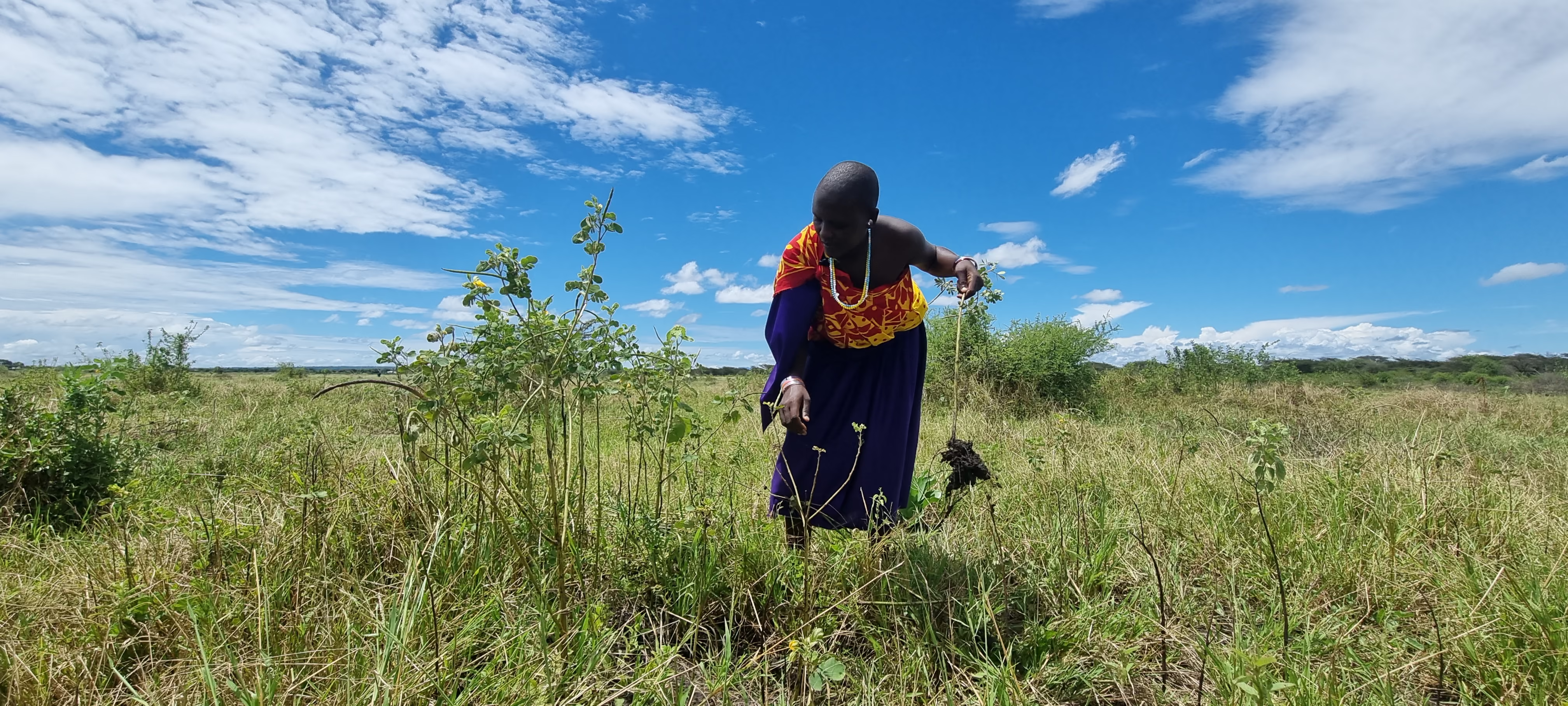
This project is implemented in the transboundary Natron–Nguruman ecosystem across Tanzania and Kenya. In Tanzania, it focuses on Gelai Merugoi and Gelai Lumbwa wards in Longido District, while in Kenya it targets communities in Magadi and Loita within the Ewaso Nyiro catchment. The project aims to protect key biodiversity areas and water catchments while improving livelihoods through community-based conservation and climate-resilient economic activities, with a strong focus on women’s empowerment and transboundary collaboration.
Key Activities
1. Transboundary Conservation and Water Catchment Protection
The project strengthens conservation of the Natron–Nguruman ecosystem by promoting sustainable rangeland management and protecting critical water catchments. It supports coordination between Tanzania and Kenya through stakeholder dialogue and joint conservation efforts. This ensures effective management of shared natural resources and maintains ecosystem connectivity across borders.
2. Wildlife Protection and Human–Wildlife Coexistence
The project enhances wildlife protection by supporting 15 rangers in Kenya and establishing community-based Human–Wildlife Conflict (HWC) workgroups. Over 2,000 community members receive awareness training on coexistence strategies, improved livestock husbandry, and conflict prevention. These efforts reduce livestock predation, improve safety, and promote positive relationships between communities and wildlife.
3. Women Empowerment and Climate-Resilient Livelihoods
The project empowers women and youth through training in marketplace literacy and support for nature-based enterprises. Around 300 women and youth are trained to engage effectively in markets, while 35 individuals are supported to establish leather micro-enterprises in Kenya and a 20-woman tannery is strengthened in Tanzania. These activities diversify income sources and enhance resilience to climate change.
4. Education and Community Awareness
The project delivers conservation education programs reaching over 7,000 students and community members. Activities include awareness campaigns, training sessions, and interactive events to promote sustainable resource use and environmental stewardship. These initiatives foster long-term behavioural change and strengthen community engagement in conservation.
5. Capacity Building and Knowledge Transfer
The project builds local capacity through training of community members, trainers, and partners to ensure sustainability. Peer-to-peer learning and transboundary collaboration enable scaling of successful approaches such as marketplace literacy. Local trainers are equipped to continue knowledge dissemination independently, ensuring long-term impact beyond the project lifespan.

Funded by
Biodiversity and Protected Area Management Programme (BIOPAMA)
Lead organization
Institute of Zoology, Zoological Society of London (ZSL)
Partners
Oikos East Africa, Istituto Oikos, Southern Rift Organization of Land Owners (SARALO)
Time frame
November 2020 to November 2022
More programmes

Empowering communities through sustainable conservation
We believe the health and wellness of future generations will be secured with today’s people-centered approach to environmental conservation.
.jpg)