Conservation
Ongoing

Improve the Environment: Use Clean Cookstoves
Abstract
In Longido District, northern Tanzania, most households rely on traditional cooking methods such as three-stone fires and inefficient charcoal stoves. These practices contribute to high levels of deforestation, increased carbon emissions, and severe indoor air pollution, which negatively impacts human health, especially for women and children. Additionally, reliance on fuelwood places economic and time burdens on households, particularly women who spend hours collecting firewood.
This project addresses these challenges by distributing improved cookstoves (ICS) to 20,000 households across 29 villages. These stoves are significantly more efficient, reducing fuel consumption by 50–70% and lowering greenhouse gas emissions. The project also includes community sensitization campaigns on clean cooking and environmental conservation, alongside training local facilitators to support implementation and monitoring.
By replacing traditional cooking methods, the project improves health, reduces environmental degradation, and contributes to climate change mitigation while enhancing livelihoods and empowering local communities.
Introduction
This project is implemented in Longido District, Arusha Region, targeting 29 villages across 10 wards. It aims to reduce reliance on traditional cooking methods by introducing energy-efficient cookstoves to rural households. As part of the broader Green Tanzania Cookstove Programme, the project contributes to environmental conservation, improved health, and reduced carbon emissions while promoting clean energy access in underserved communities.
Key Activities
1. Household Registration and Baseline Assessment
The project begins with stakeholder engagement meetings and a detailed baseline assessment across the 29 target villages. This includes household registration, identification of current cooking practices, and kitchen performance tests to measure fuel consumption and emissions. Data collected establishes benchmarks for monitoring impact, including firewood use, cooking time, and indoor air quality. This step ensures accurate targeting of beneficiaries and provides a foundation for measuring environmental and socio-economic outcomes.
2. Distribution of Improved Cookstoves (Jiko Rafiki)
A total of 20,000 improved cookstoves will be distributed to households currently using traditional three-stone fires or inefficient charcoal stoves. The distribution is conducted systematically at the village level to ensure full coverage and proper documentation. Each stove is designed for higher thermal efficiency (over 35%), reducing fuel consumption by 50–70%. Beneficiaries are guided on proper usage during distribution to maximize efficiency and ensure immediate adoption.
3. Community Sensitization on Clean Cooking and Environment
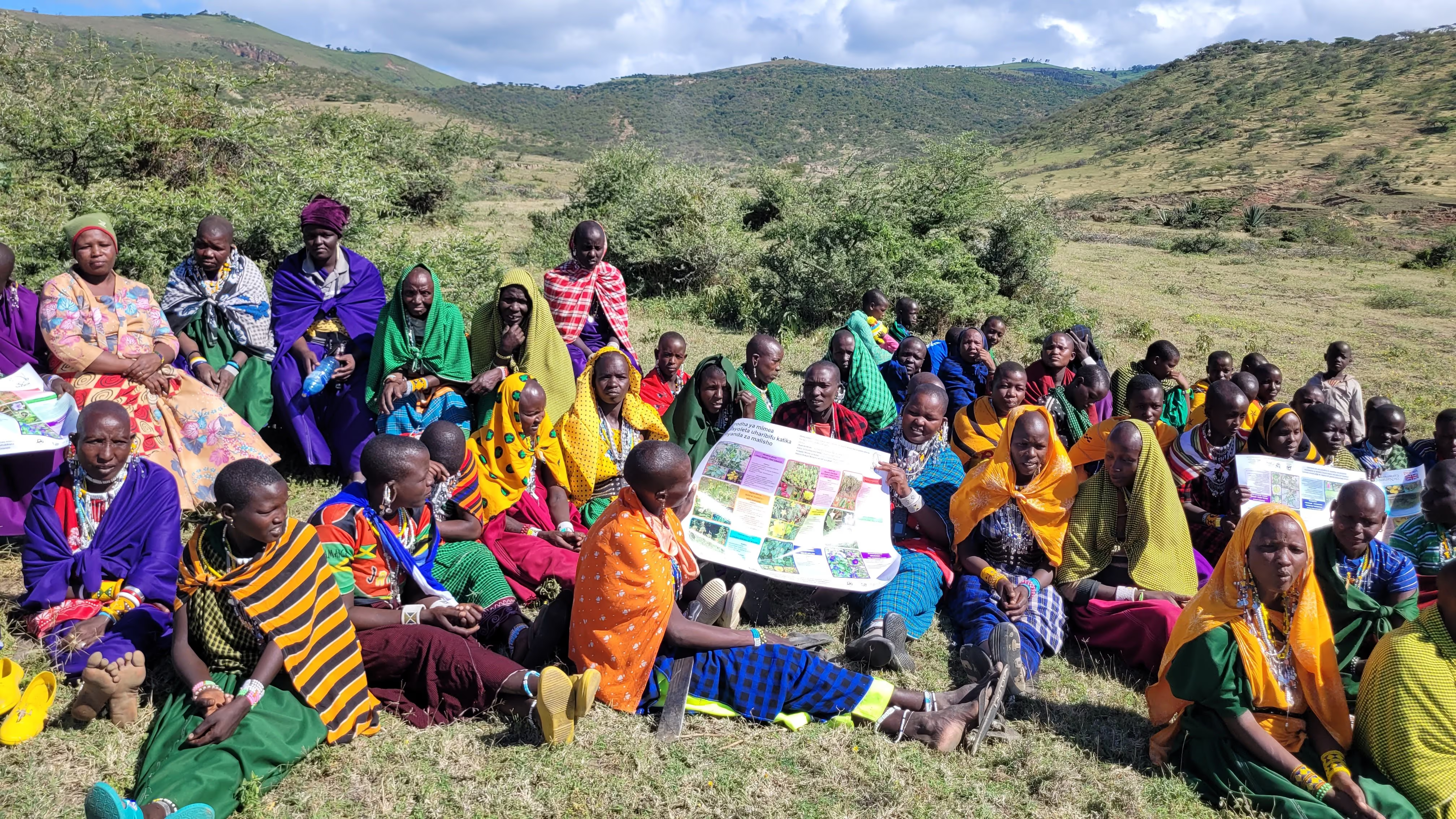
The project conducts targeted awareness campaigns at the village level, focusing on the benefits of improved cookstoves. These include reduced smoke exposure, improved health, decreased fuel costs, and environmental conservation. Sensitization sessions are delivered through community meetings, demonstrations, and household visits. Messaging emphasises behaviour change, encouraging consistent use of improved stoves and discouraging continued reliance on traditional cooking methods.
4. Training and Deployment of Village Facilitators
Local youth and women are selected and trained as village facilitators to support project implementation. Their roles include mobilizing households, assisting in stove distribution, conducting follow-up visits, and providing user guidance. Facilitators also collect monitoring data and serve as a link between communities and project implementers. This approach builds local capacity, creates employment opportunities, and ensures sustainability of project activities.
5. Monitoring, Reporting, and Verification (MRV)
A structured monitoring system is implemented to track stove usage, fuel savings, and emission reductions. Regular household visits are conducted to assess adoption rates and functionality of stoves. Data collected supports reporting under carbon credit standards (Gold Standard) and ensures compliance with national regulations. Monitoring also helps identify challenges and improve implementation strategies over time.
6. Maintenance and After-Sales Support
The project provides free maintenance services for all distributed cookstoves for up to five years. A multi-level support system is established, including village facilitators and technical teams, to address repairs and user concerns. This ensures long-term functionality, sustained usage, and continued environmental and health benefits.
7. Carbon Credit Generation and Climate Impact Management
The project quantifies reductions in greenhouse gas emissions resulting from decreased fuel consumption. These reductions are verified and converted into carbon credits under the Gold Standard framework. The carbon credits are integrated into the Green Tanzania Cookstove Programme, contributing to global climate mitigation efforts while supporting project sustainability.
This project contributes to multiple Sustainable Development Goals by improving health (SDG 3) through reduced indoor air pollution, promoting gender equality (SDG 5) by empowering women and reducing their workload, and enhancing access to affordable and clean energy (SDG 7) through efficient cookstoves. It also supports decent work and economic growth (SDG 8) by creating local employment opportunities, contributes to climate action (SDG 13) by reducing greenhouse gas emissions through lower fuel consumption, and protects terrestrial ecosystems (SDG 15) by decreasing deforestation and land degradation in Longido District.
.avif)
Funded by
ENI SpA (Italian Energy Company) — Italian Agency for Development Cooperation
Lead organization
OffgridSun Srl
Partners
Oikos East Africa
Time frame
2026-2031
More programmes
Empowering communities through sustainable conservation
We believe the health and wellness of future generations will be secured with today’s people-centered approach to environmental conservation.
.jpg)