
WASH
Ongoing

Safepad School and Community Distribution
Abstract
In Tanzania, several studies have been undertaken on Menstrual Health and Hygiene (MHH), which revealed some gaps in different areas of the MHH pillars, including limited coordination, lack of a coherent approach in delivering MHH education, limited access to MHH products, inadequate water and sanitation facilities and disposal options for menstrual waste. Recently, NIMR, in collaboration with UNICEF Tanzania, conducted a study on the MHH situation among school girls in Tanzania that revealed several MHH challenges, including inadequate knowledge (72%), unaffordable commercial menstrual products (40%), inadequate hand washing facilities (70%), lack of effective disposal solutions (75%), lack of changing rooms with basic amenities (83%), and nearly 17% of girls reporting missing school for at least 48 days of school every year. Oikos EA, in partnership with Real Relief, recognising the challenges in access to safe menstrual products, contributes to addressing it by developing a sustainable supply chain of antimicrobial reusable sanitary pads for the needs of women, girls, and persons with disabilities.
Introduction
The project targets the population in Manyara Region, both schoolgirls and women. Building on the pilot distribution program conducted by OEA in Arusha and the Manyara Region with WB funding, this project aims to scale up MHH interventions by ensuring access to certified antimicrobial reusable pads (Safepad), strengthening distribution networks, and enhancing awareness. The pilot demonstrated strong demand for reusable pads and highlighted the need for a structured and sustainable distribution system to reach schools and communities effectively.
Real Relief, in collaboration with A-To-Z Textile Mills, has launched Safepad, a reusable antimicrobial sanitary pad manufactured in Tanzania. Certified by TBS and TMDA, Safepad is designed to improve menstrual hygiene while reducing financial and environmental burdens; the current production capacity can be scaled to 50,000 pads a day.
Key Activities
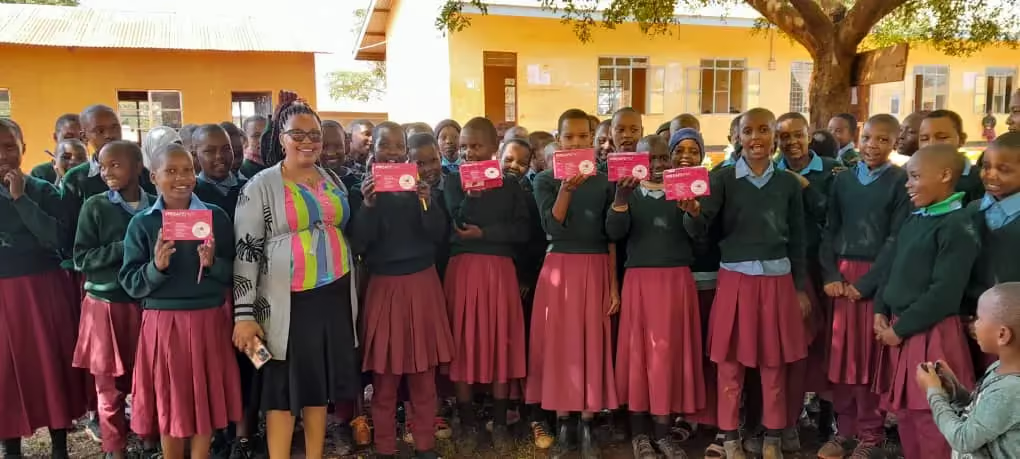
- Project launch - The official launch of the Safepad School Distribution Project in Babati, Manyara Region on May 7th, 2025, marked a significant milestone in promoting menstrual health and hygiene among schoolgirls in Manyara region. With active participation from national and regional stakeholders, including the Ministry of Health, Ministry of Education, PO-RALG, and Real Relief, the event succeeded in raising awareness, securing institutional support, and formally initiating the regional implementation phase.
- Inception meeting at district level-The activity focused on introducing the project at the district level, ensuring project buy-in from the government officials and community representatives in promoting menstrual health and hygiene among schoolgirls in Manyara region.
- District Distribution Agents/CHW recruitment- With targeted support, incentives, and training, the qualified and selected DDAs will play a key role in creating awareness and ensuring sustainable access to SafePad sanitary pads in schools and communities, hence an effective and strong local distribution network. It was important that the selected DDAs are from their localities to create trust in the communities they are serving and minimise logistics and distribution costs for sustainability.
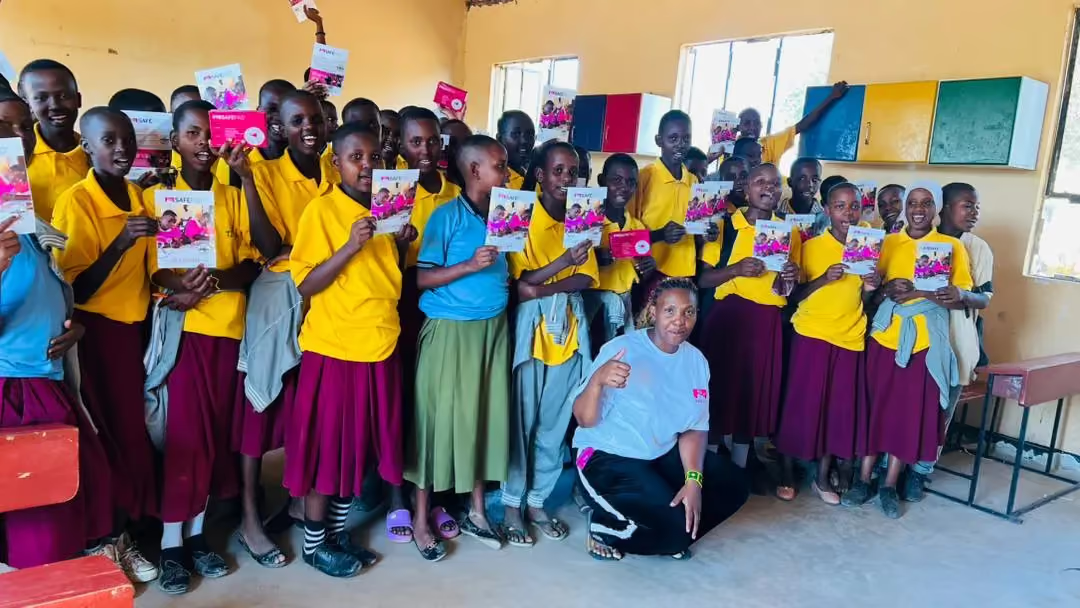
- Development of teaching and Visibility Materials-Menstrual Health and Hygiene education materials developed to enhance knowledge and correct information to the school girls and communities about MHH, along with addressing harmful taboos and misconceptions associated with accessing and using safe menstrual products. Visibility materials meant for the promotion and marketing of Safepad antimicrobial reusable sanitary products.
- DDAs/CHWs Training-Training will capacitate agents in promoting a market-based supply mechanism for reusable sanitary pads, while also enhancing awareness and knowledge of menstrual health and hygiene within schools and the wider community in Manyara region.
- DDAs/CHWs Review Meeting -A review meeting brought together the DDAs/CHWs and Project technical team to evaluate field performance, gain feedback, identify challenges, and establish improved strategies for sustainable sales and distribution across villages, schools, and women’s groups. Also provided with visibility materials for promotion and MHH awareness creation
- Project monitoring, evaluation and accountability-Follow-up made to the Sales Agents on the distribution of Safe pad product at school, wholesale and retail shops, along with sales progress and providing them with coaching and mentorship assistance on the marketing, promotion and awareness creation gaps identified.
- Project impacts documentation-Success stories, lessons learned/ challenges and key issues received from DDAs/CHWs were documented, discussed and strategised to improve the developed sustainable, safe menstrual product supply system.
Funded by
Real Relief-Denmark
Lead organization
Oikos EA
Time frame
February 2025-June 2026
More programmes

Empowering communities through sustainable conservation
We believe the health and wellness of future generations will be secured with today’s people-centered approach to environmental conservation.
.jpg)