WASH
Closed

Community Engagement for Rural Water Supply Public-Private Partnership (PPP)
Abstract
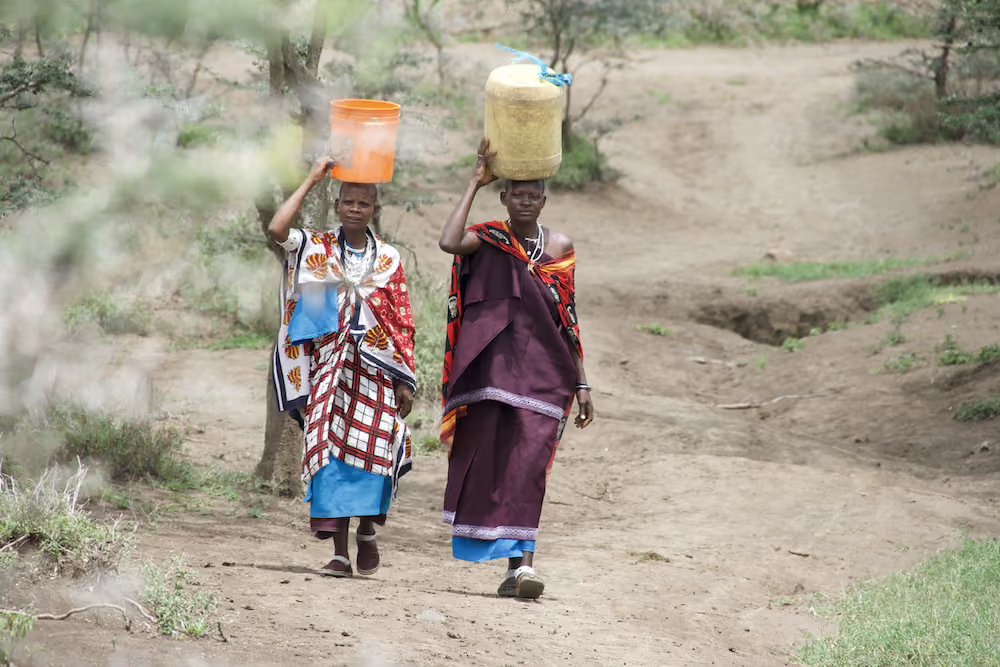
Rural water schemes in Tanzania often face sustainability challenges due to inefficient revenue collection, high maintenance costs, and a lack of structured community engagement. In the Manyara Region, these issues, compounded by climate change, historically led to unreliable services that disproportionately burdened women and vulnerable groups. Traditional water points often struggled with "non-revenue water" and lacked the financial transparency needed for long-term viability.
This project addressed these systemic barriers by designing and implementing a robust community engagement process for a Public-Private Partnership (PPP) model. We facilitated the transition to pre-paid water supply technology, ensuring transparent, "pay-as-you-go" access. By empowering Community-Based Water Supply Organizations (CBWSOs) and implementing a learning-by-doing approach, we reduced water collection times for women and improved school sanitation. Furthermore, we conducted a specialised study on pre-paid meters for cattle troughs, ensuring that the unique needs of pastoralist communities were integrated into the region's climate-resilient water infrastructure.
Introduction
The project aimed to establish a community-backed foundation for a PPP investment in pre-paid water technology. By identifying and engaging interested CBWSOs, the assignment sought to professionalise water management, improve climate resilience, and ensure that infrastructure design was informed by the voices of end-users, including women, pastoralists, and vulnerable groups. The ultimate goal was to prove the feasibility of a sustainable, technology-driven water service delivery model in rural Tanzania.
Key Activities
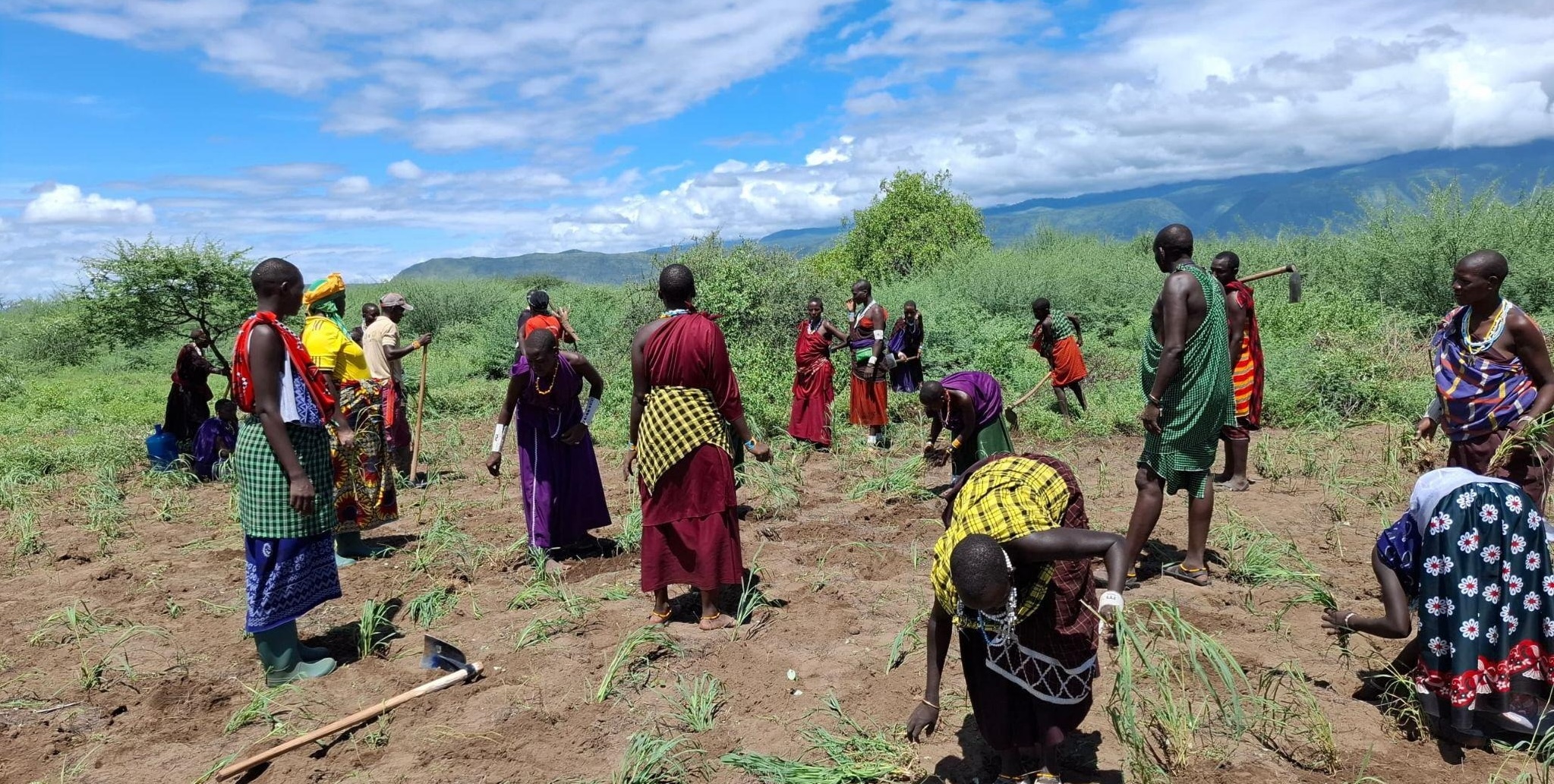
- PPP Feasibility & Stakeholder Engagement - We designed and implemented a multi-tiered community engagement framework to identify CBWSOs ready for PPP investment. This involved moving from a "long-list" of 360 organizations to intensive workshops and in-village field visits. By prioritizing voluntary participation, we ensured that the transition to pre-paid technology was supported by local leadership and aligned with the operational realities of the Manyara Region.
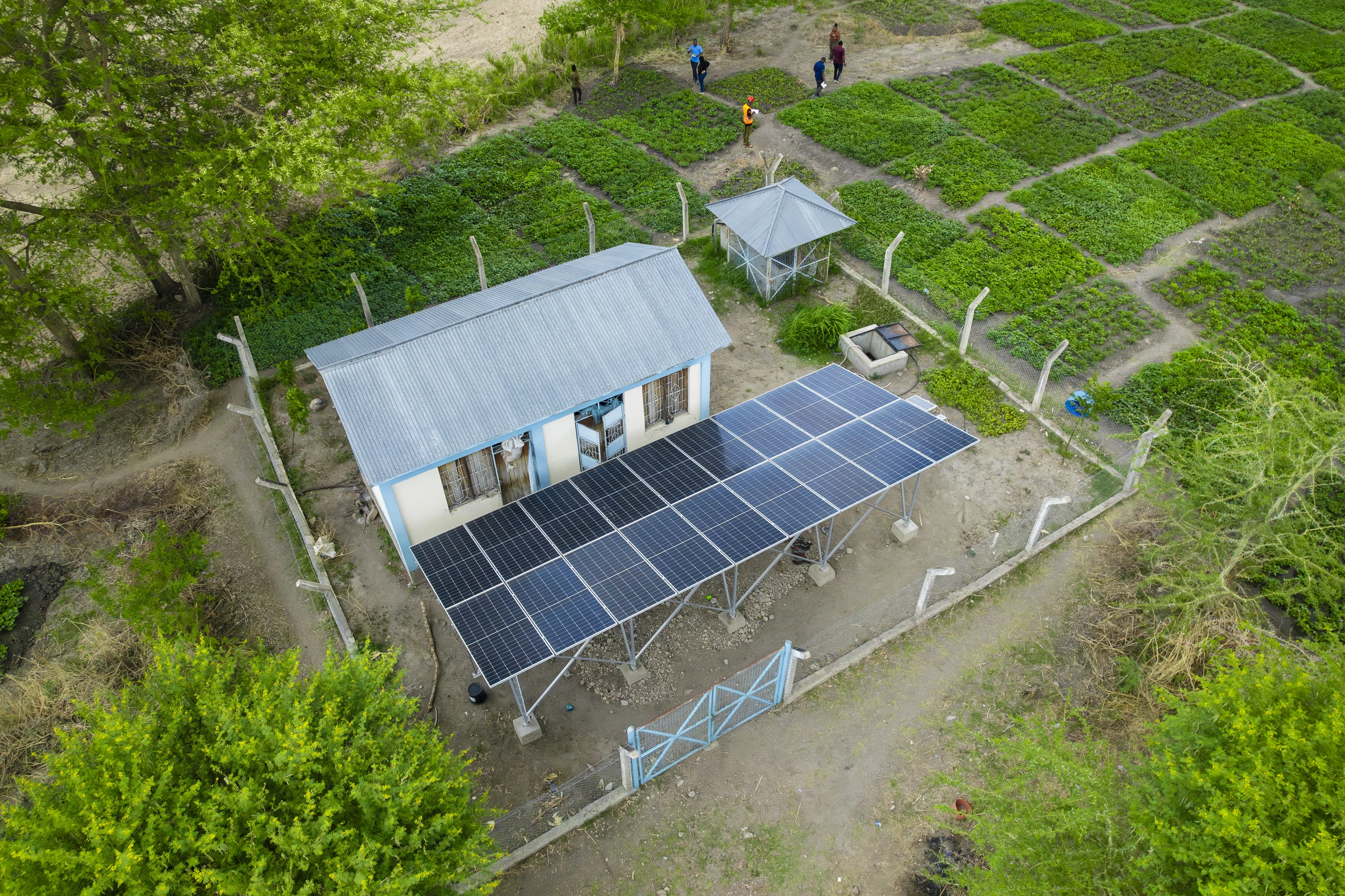
- Pre-Paid Technology & Financial Sustainability - A central pillar was the introduction of pre-paid water supply technology. This intervention replaced traditional collection methods with a transparent, digital system that minimizes revenue loss and ensures funds are available for maintenance. We worked closely with RUWASA to describe how this technology reduces "time-poverty" for women and provides a reliable, 24/7 water supply that can withstand climate-induced scarcity.
- Inclusive WASH in Schools - To ensure the project's benefits reached the next generation, we focused on installing improved sanitation facilities in primary schools. These included gender-segregated latrines and handwashing stations equipped with soap and a guaranteed water supply. By focusing on school-aged children, the project addressed hygiene barriers that previously hindered education, particularly for young girls, ensuring a healthy and dignified learning environment.
- Pastoralist Systems & Cattle Trough Study - Recognizing the cultural and economic importance of livestock in Manyara, we conducted a specialized study on the social, technical, and financial feasibility of pre-paid meters for cattle troughs. Led by experts in pastoralist systems, this activity examined how to integrate livestock watering into the PPP model without disrupting traditional livelihoods, ensuring the water system serves both domestic and economic needs.
- Community Governance & Complaints Management - Sustainability was secured through the professionalisation of CBWSOs and the establishment of a formal complaints management system. We implemented an "adaptive learning" approach, training local organizations to manage issues and track system performance. This created a bridge between the private technology providers and the community, ensuring that the water infrastructure remains accountable to the people it serves.
Funded by
The World Bank
Lead organization
Istituto Oikos
Partners
Oikos East Africa, RUWASA
Time frame
2023-2024
More programmes
Empowering communities through sustainable conservation
We believe the health and wellness of future generations will be secured with today’s people-centered approach to environmental conservation.
.jpg)